

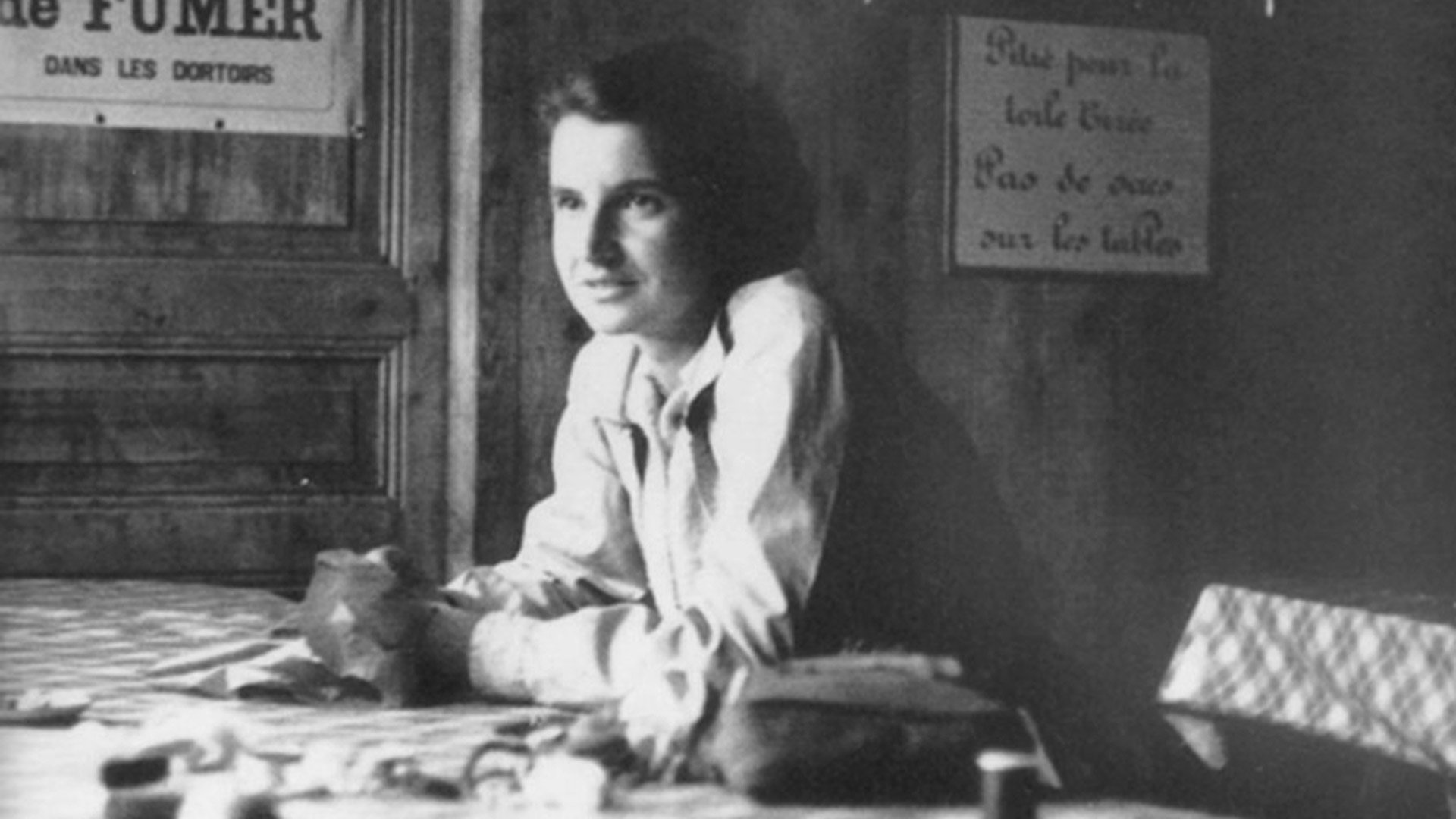
Le mois de mars offre une occasion importante de célébrer la marque indélébile que les femmes ont laissée dans l’histoire. Dans le domaine de la science, en particulier de la génétique, le récit met souvent en avant les réalisations de figures masculines. Pourtant, il est crucial de reconnaître le rôle central que les femmes ont joué dans l’élaboration de notre compréhension de la génétique. L’une de ces personnalités est Rosalind Franklin, dont les travaux pionniers ont ouvert la voie à des découvertes révolutionnaires dans ce domaine.
Rosalind Franklin, born in 1920 in London, England, was a brilliant scientist whose contributions to the study of molecular structures were groundbreaking. Educated at Cambridge University, Franklin’s early research focused on X-ray diffraction techniques, a method that would later prove instrumental in elucidating the structure of DNA. Her meticulous approach and keen eye for detail set her apart as a gifted experimentalist.
In the early 1950s, Franklin joined King’s College London, where she began her landmark work on DNA. Using X-ray crystallography, Franklin captured the now-iconic “Photo 51,” an image that provided crucial insights into the helical structure of DNA. This image, though initially underappreciated, played a pivotal role in the eventual elucidation of DNA’s double helix structure by James Watson and Francis Crick.
Despite her significant contributions, Franklin’s role in the discovery of DNA’s structure was overshadowed for many years. It was only in the aftermath of the Nobel Prize awarded to Watson, Crick, and Maurice Wilkins in 1962 that Franklin’s contribution gained wider recognition. Tragically, Franklin passed away from ovarian cancer in 1958, at the age of 37, before the Nobel Prize was awarded.
However, Rosalind Franklin’s legacy extends far beyond her work on DNA. Her research laid the foundation for advancements in molecular biology and genetics, influencing countless scientists in the decades that followed. Moreover, her perseverance in the face of adversity serves as an inspiration to aspiring scientists, particularly women, who continue to navigate male-dominated fields.
In celebrating Women’s History Month, it is imperative not only to recognize Rosalind Franklin’s contributions but also to highlight the myriad other women who have left an indelible mark on the field of genetics. From Barbara McClintock, whose discovery of mobile genetic elements challenged prevailing dogma, to Jennifer Doudna, who co-developed the revolutionary CRISPR-Cas9 gene-editing technology, women have been at the forefront of genetic research.
Barbara McClintock, awarded the Nobel Prize in Physiology or Medicine in 1983, was a trailblazer in the study of maize genetics. Her work on transposable elements, or “jumping genes,” revolutionized our understanding of genetic regulation and earned her acclaim as one of the most innovative scientists of the 20th century.
Jennifer Doudna, along with collaborator Emmanuelle Charpentier, made history in 2012 with their development of the CRISPR-Cas9 gene-editing technology. This groundbreaking tool has revolutionized genetic research and holds immense potential for applications in medicine, agriculture, and beyond. Doudna’s achievements have garnered widespread recognition, including the Nobel Prize in Chemistry in 2020.
Ces femmes remarquables, parmi d’innombrables autres, ont brisé les barrières et remodelé le paysage de la génétique. Leurs contributions témoignent de l’importance de la diversité et de l’inclusion dans la science, ainsi que de la nécessité de reconnaître et de célébrer les réalisations des femmes dans les domaines STEM.
As we honour Women’s History Month, let us not only reflect on the past but also look toward the future with hope and determination. By amplifying the voices and contributions of women in genetics and beyond, we can foster a more equitable and inclusive scientific community where all individuals are empowered to pursue their passions and make meaningful contributions to humanity’s collective knowledge.
 Français
  English (UK)
  Suomi
Suomi  Deutsch
  हिन्दी
  Italiano
  Bahasa Melayu
  Español
  සිංහල
සිංහල  Cymraeg
  English
  English (Canada)
  English (Australia)